- PH: +91 8828443924
- Email: Response@ShrinithaFurnace.Com

Vacuum Oven Manufacturer in India
Industrial Vacuum Oven from Ambient to 300°C
Shrinitha Scientific Company is an Indian manufacturer and exporter of Vacuum Ovens, designed for controlled heating, drying, degassing, and thermal processing under reduced pressure. Our Vacuum Ovens operate within a standard temperature range from ambient to 300°C, making them suitable for a wide range of industrial, laboratory, research, and material processing applications.
We manufacture Vacuum Ovens for applications where conventional atmospheric drying may not be suitable, particularly when materials are sensitive to heat, oxidation, or prolonged exposure to elevated temperatures. By reducing the pressure inside the chamber, a vacuum oven can facilitate moisture and volatile removal at temperatures appropriate to the material and process.
Our Vacuum Ovens can be customized according to chamber capacity, operating temperature, vacuum requirements, material characteristics, and production needs. Depending on the selected configuration, suitable temperature controls, vacuum connections, pressure monitoring, and material loading arrangements can be incorporated.
At Shrinitha Scientific Company, we focus on providing application-specific vacuum heating solutions for industrial manufacturers, laboratories, research institutions, and quality control facilities.
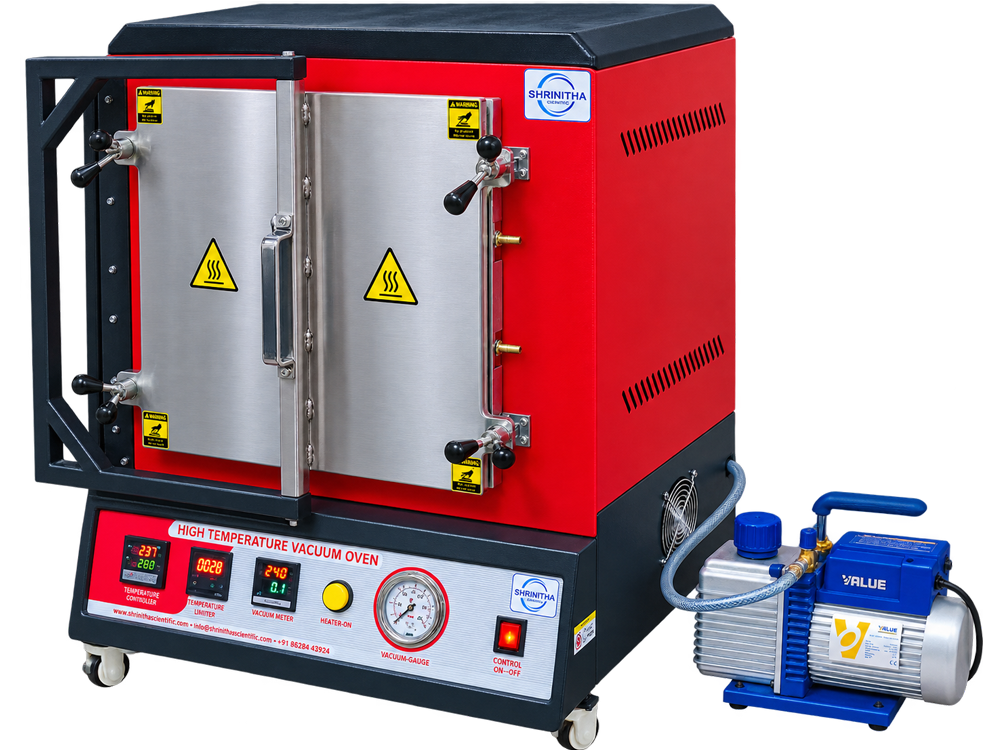
What Is a Vacuum Oven?
A Vacuum Oven is a specialized heating chamber designed to process materials under reduced pressure. It combines controlled heating with a vacuum system to remove air and facilitate the removal of moisture, solvents, and other volatile substances from compatible materials.
Reducing the pressure inside the chamber lowers the boiling temperature of many liquids, allowing certain materials to be dried at lower temperatures than would be required under atmospheric conditions. This can be useful when processing heat-sensitive materials or when limiting exposure to oxygen is important.
Vacuum ovens are commonly used for drying, degassing, moisture removal, material conditioning, and selected heat treatment applications in laboratories and industrial environments.
Shrinitha Scientific Company's Vacuum Ovens operate from ambient temperature to 300°C, with the chamber design, vacuum arrangement, and control system selected according to the intended application.
High Temperature Vacuum Oven Rectangular 500°C
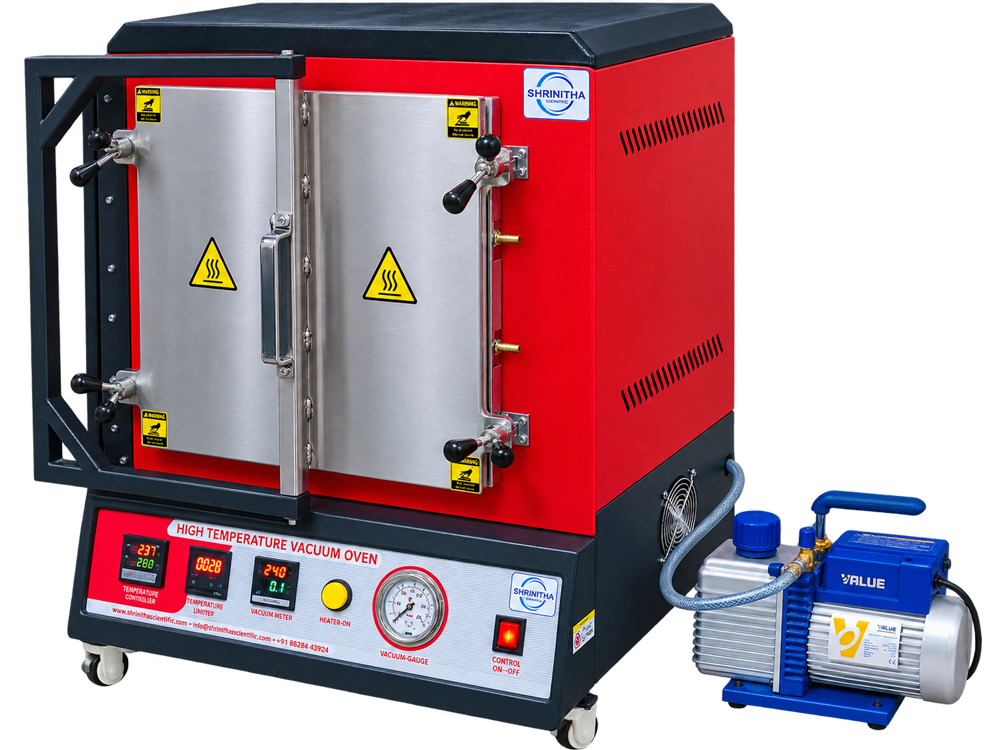
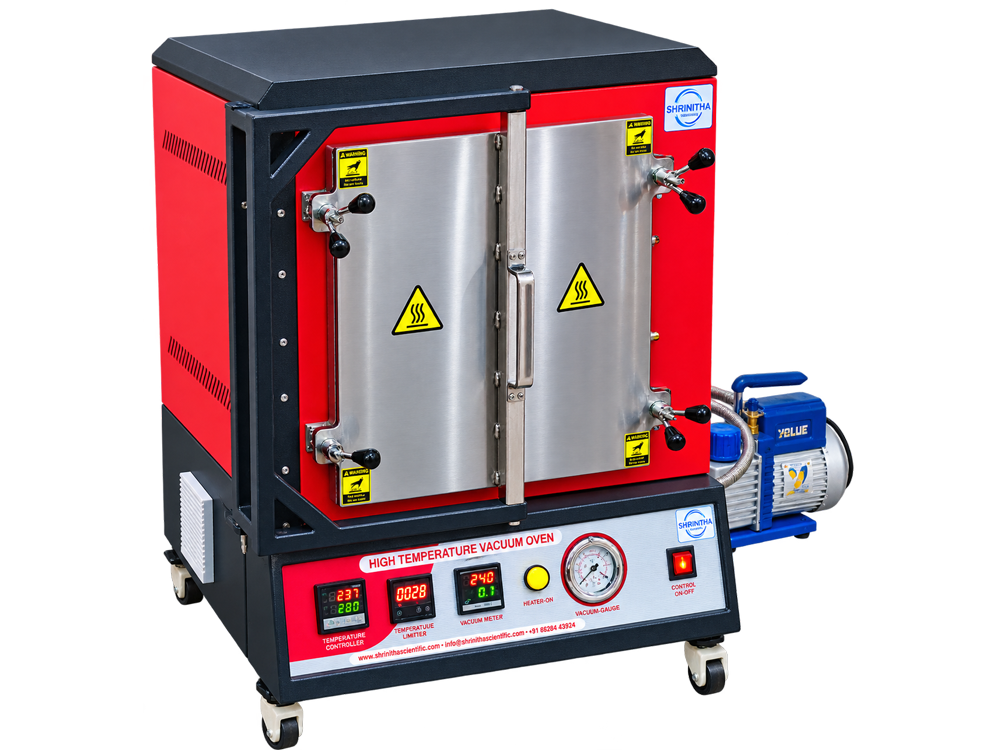
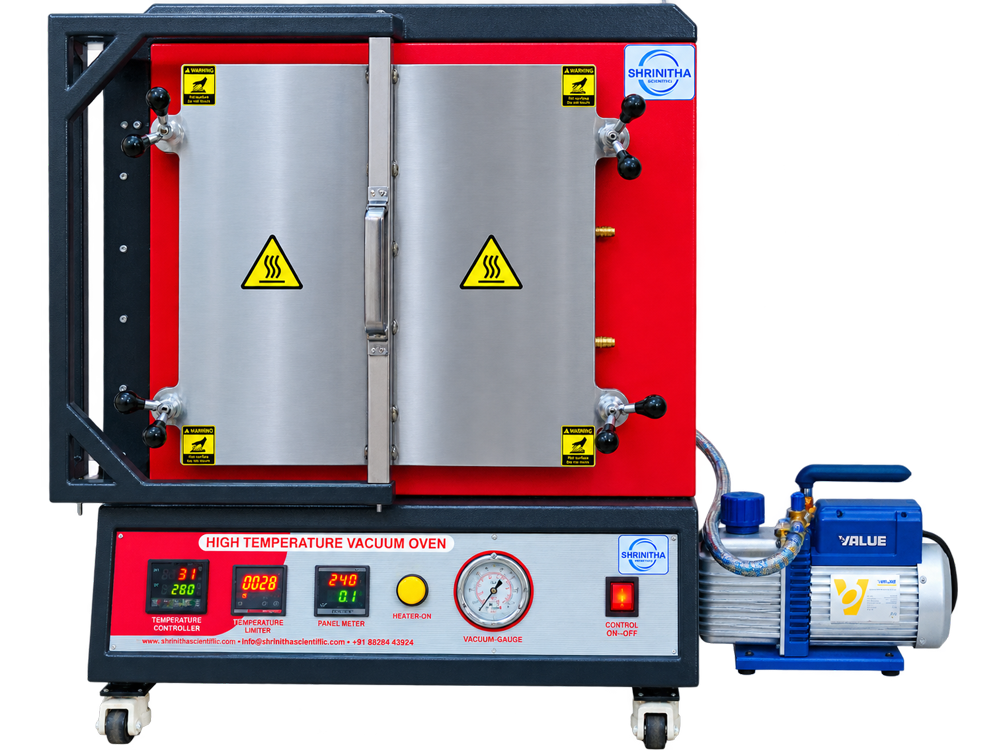
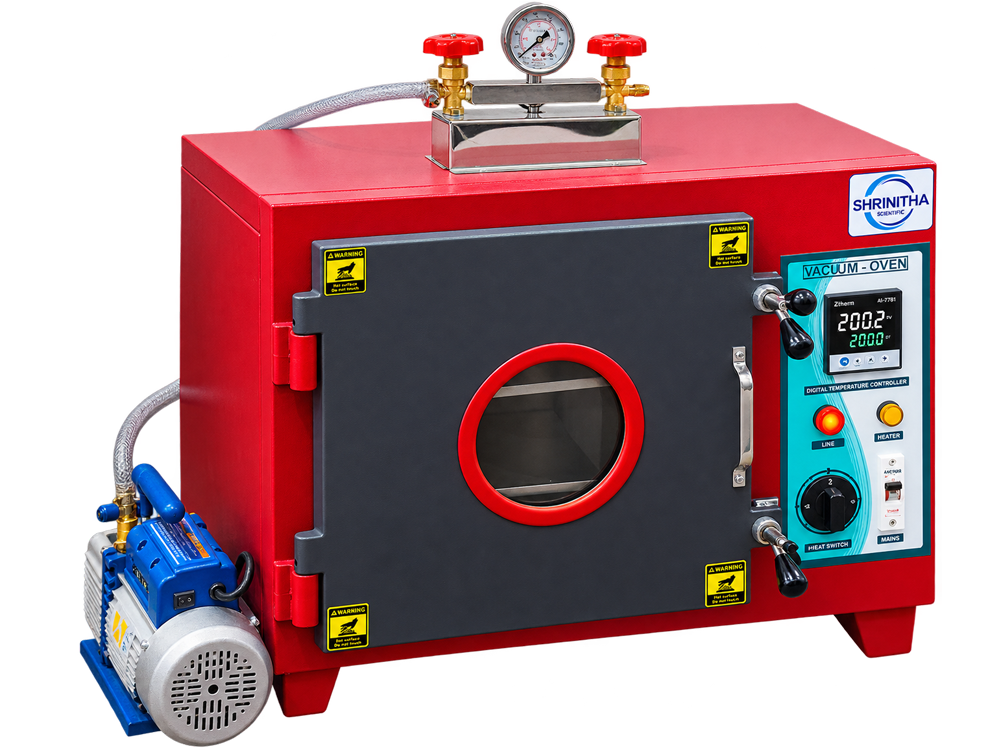
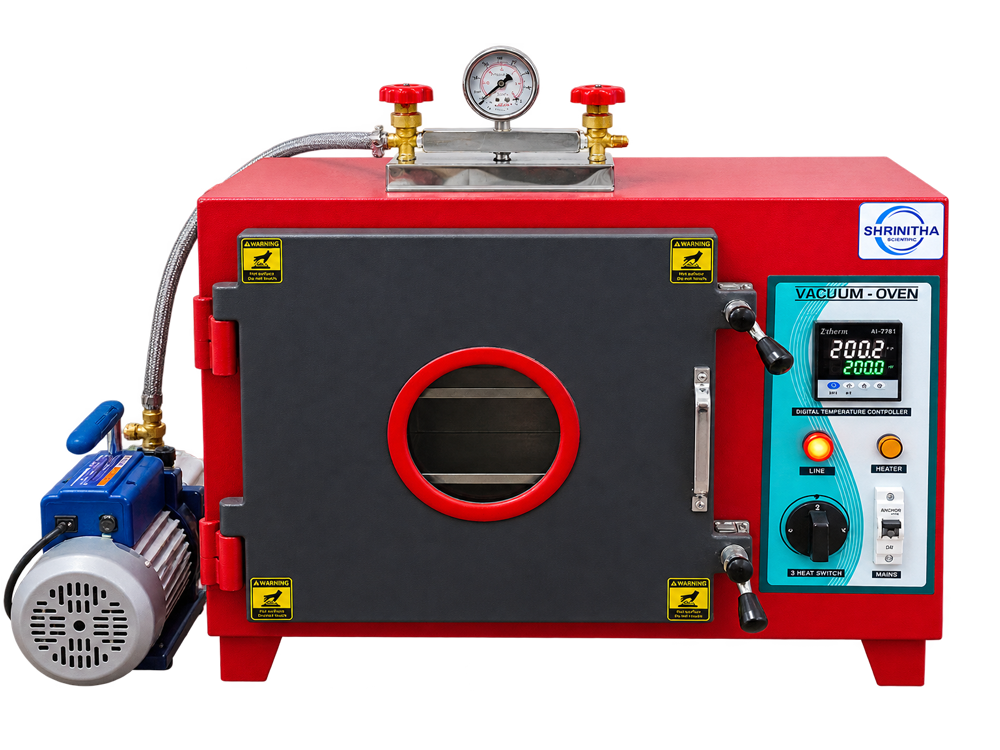
Vacuum Oven Rectangular 300°C
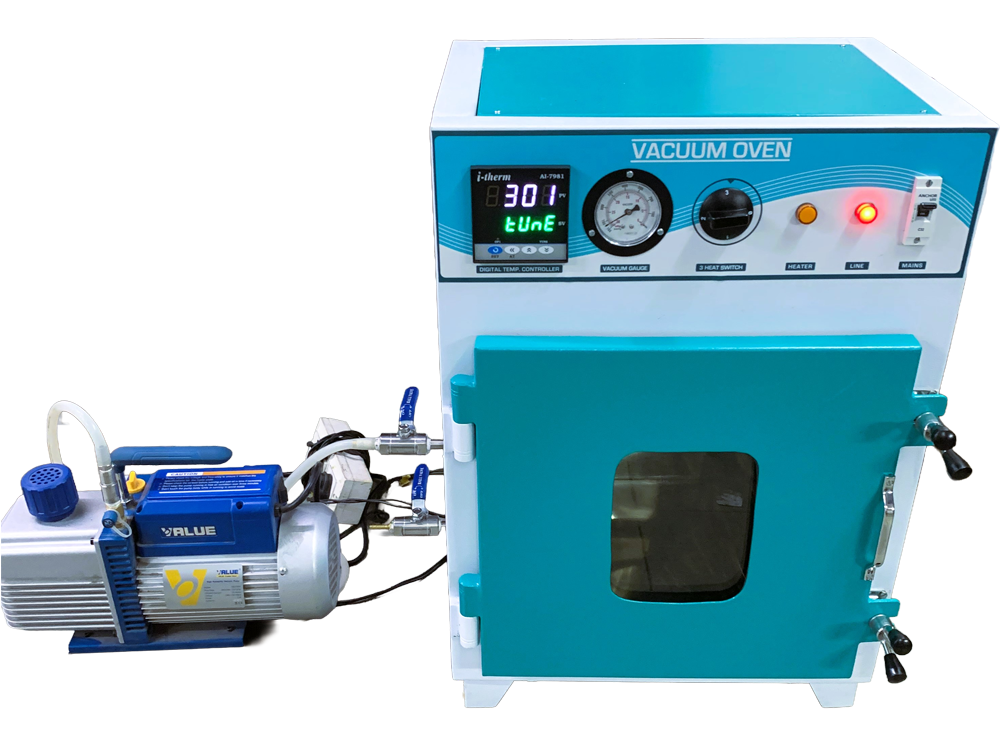
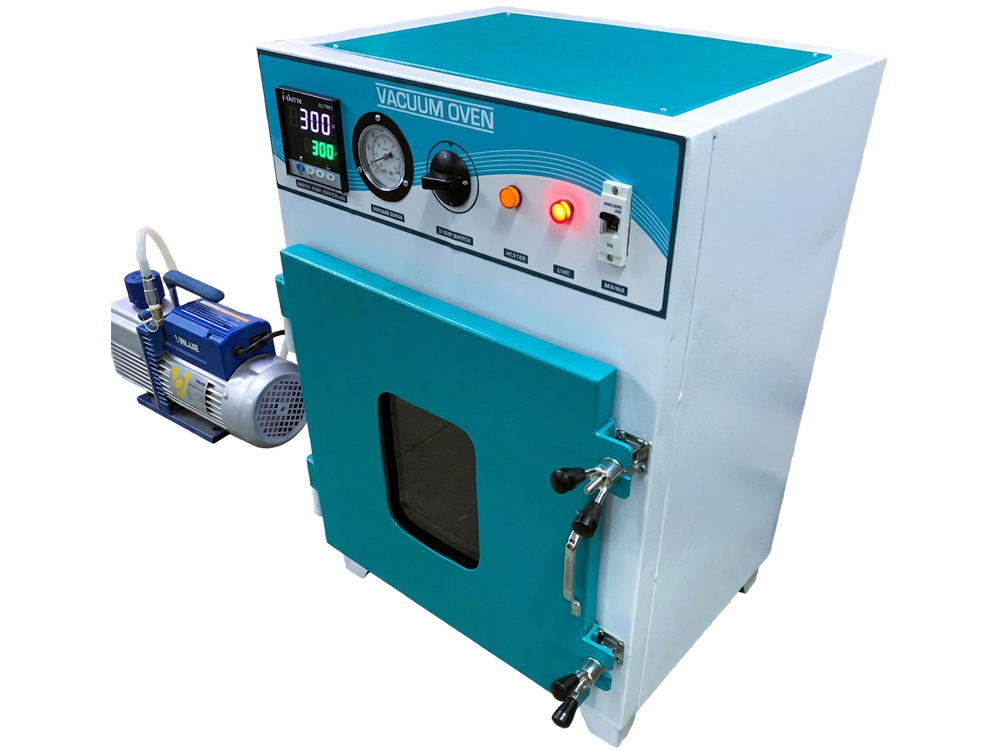
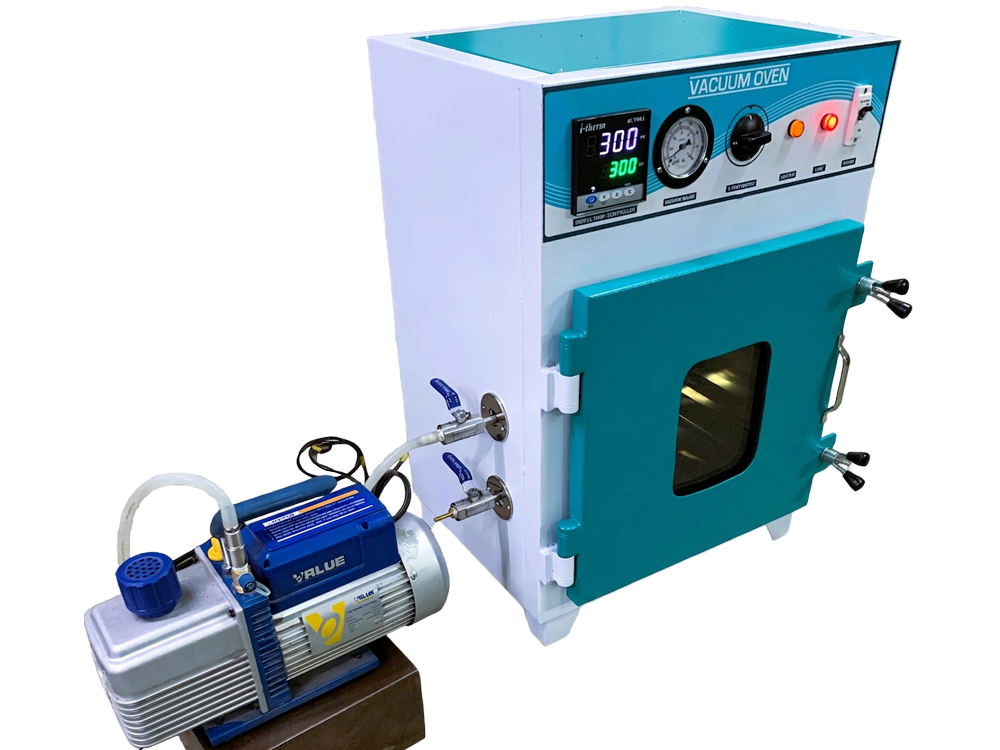
High Temperature Vacuum Oven 500°C
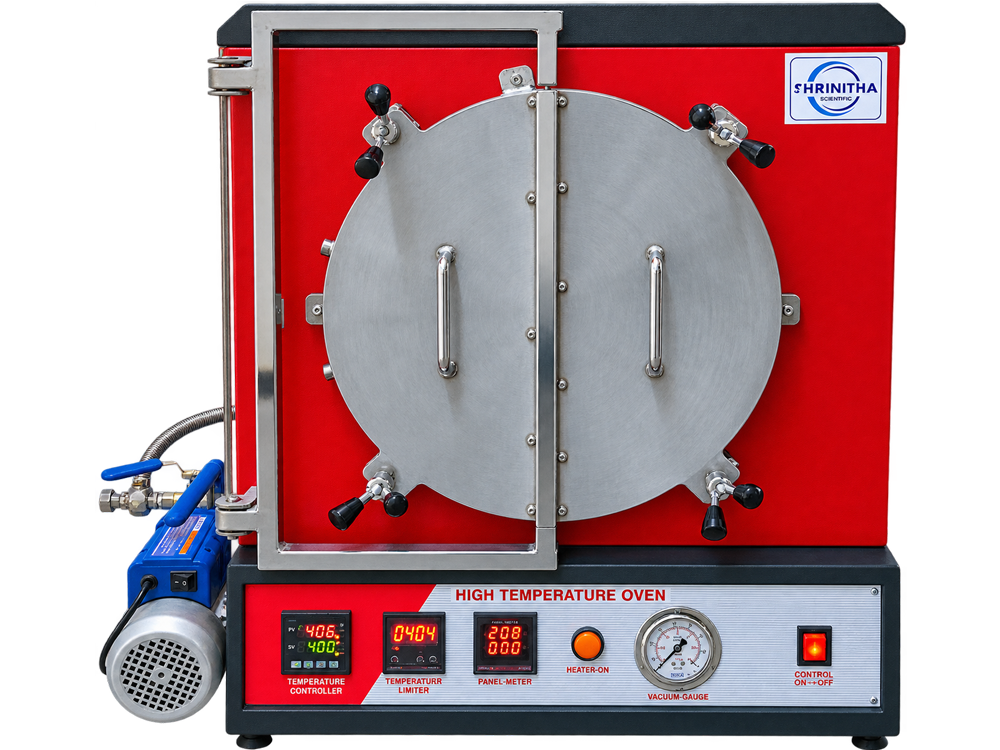
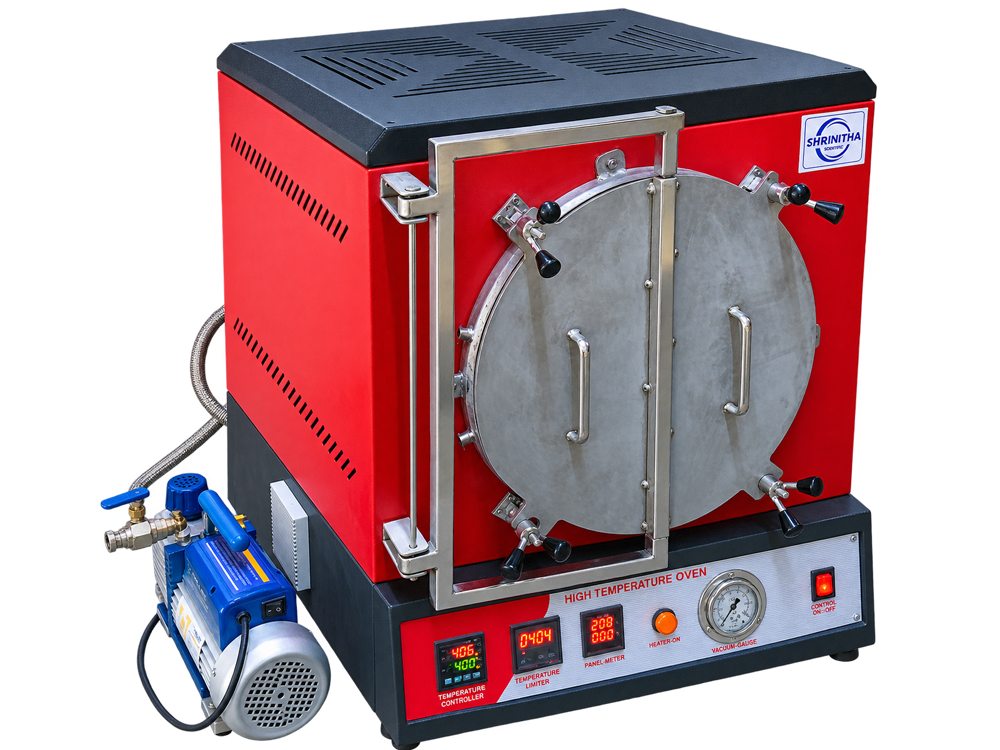
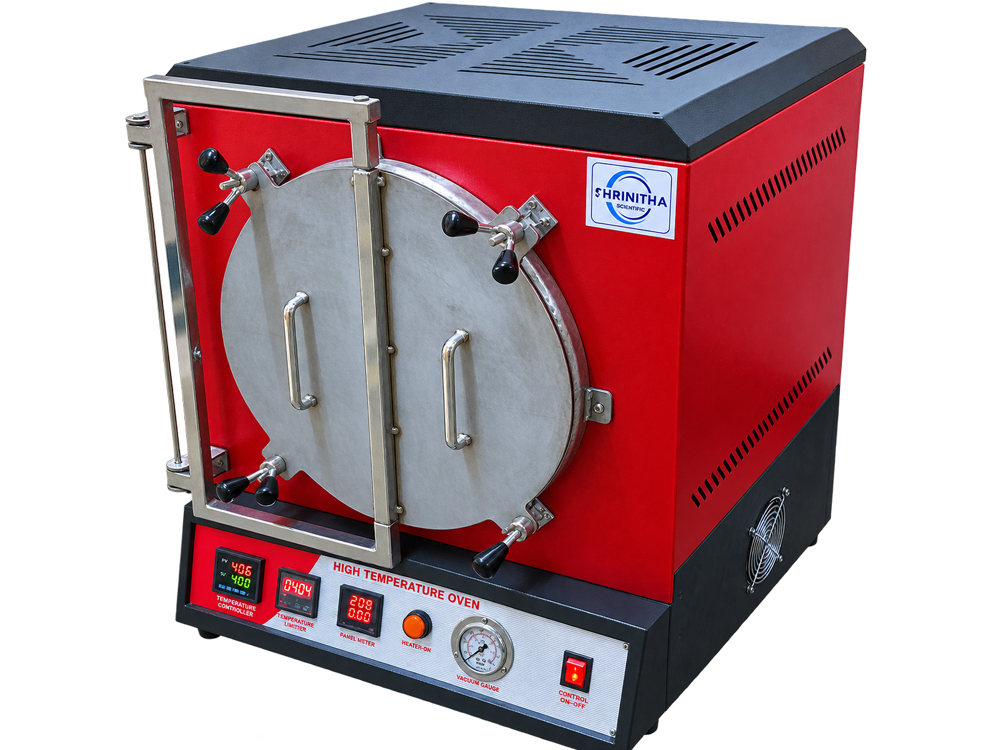
Vacuum Oven Round 250°C
Key Features of Our Vacuum Oven
- 1. Wide Operating Temperature Range
Our Vacuum Ovens are designed for standard operation from ambient temperature up to 300°C. This range supports a variety of vacuum-assisted drying and thermal processing applications. - 2. Reduced-Pressure Processing
The oven chamber is designed to operate under reduced pressure using a suitable external or specified vacuum pumping arrangement. The required vacuum level depends on the selected model and application. - 3. Controlled Temperature Operation
Temperature control arrangements allow the operator to select and maintain the required heating temperature according to the material being processed. - 4. Vacuum-Tight Chamber Design
The chamber, door sealing arrangement, vacuum connections, and associated fittings are selected to support vacuum operation under the specified conditions. - 5. Application-Specific Heating Arrangement
The heating system is selected according to the chamber size, operating temperature, material characteristics, and required heating cycle. - 6. Suitable Thermal Insulation
Thermal insulation is incorporated according to the operating temperature and equipment design to help reduce heat loss and support stable chamber conditions. - 7. Flexible Chamber Capacity
The internal chamber dimensions and loading capacity can be customized to accommodate different sample sizes, components, and batch quantities. - 8. Vacuum Monitoring and Control Options
A suitable vacuum gauge, pressure monitoring arrangement, isolation valve, and vacuum release facility can be incorporated according to the selected configuration. - 9. Customizable Loading Arrangement
Shelves, trays, racks, or other suitable fixtures can be provided depending on the material, chamber design, and loading requirements.
Technical Specifications of Vacuum Oven
The following table presents the general technical specifications of the Vacuum Oven range.
| Parameter | Technical Details |
|---|---|
| Product Name | Vacuum Oven |
| Manufacturer | Shrinitha Scientific Company |
| Product Category | Industrial and Laboratory Vacuum Heating Equipment |
| Standard Temperature Range | Ambient to 300°C |
| Heating System | As per selected model |
| Vacuum Operation | Reduced-pressure operation |
| Vacuum Pump | External or specified pumping arrangement, as per model |
| Vacuum Level | Selected according to chamber design and application |
| Temperature Control | Digital temperature controller |
| Programmable Control | Optional, according to configuration |
| Vacuum Monitoring | Suitable vacuum gauge or pressure monitoring system |
| Chamber Construction | Vacuum-rated chamber with suitable sealing arrangement |
| Chamber Capacity | Customized according to requirements |
| Loading Arrangement | Shelves, trays, racks, or customized fixtures |
| Insulation | Selected according to operating temperature |
| Power Supply | According to heating capacity and electrical design |
| Safety Features | As specified for the selected model |
| Customization | Available according to application requirements |
Technical note: The temperature range of ambient to 300°C is based on your supplied specification. Maximum vacuum level, absolute pressure, chamber volume, temperature uniformity, heating power, pump capacity, and material of construction must be confirmed against the actual model datasheet. Vacuum readings in mmHg, mbar, or Pa should specify whether they refer to gauge vacuum or absolute pressure.
Working Principle of Vacuum Oven
A Vacuum Oven operates by combining controlled heating with reduced pressure inside a sealed chamber. Lowering the chamber pressure can reduce the temperature at which moisture and certain volatile liquids evaporate, helping facilitate drying under suitable process conditions.
The general working sequence includes the following stages:
Step 1: Loading the Material
The samples, components, or materials are placed inside the chamber using suitable shelves, trays, or fixtures. Materials should be arranged to allow appropriate exposure to the chamber conditions.
Step 2: Chamber Sealing
The oven door is closed and secured. The sealing arrangement is designed to maintain the required reduced-pressure conditions during operation.
Step 3: Evacuation
The vacuum pumping system removes air and gases from the chamber until the required pressure is reached. The target pressure is selected according to the material and intended process.
Step 4: Controlled Heating
The heating system raises the chamber temperature to the specified set point, within the operating range of ambient to 300°C.
Step 5: Vacuum Drying or Thermal Processing
Under reduced pressure and controlled heating, moisture or suitable volatile substances can be removed from compatible materials. The processing duration depends on material properties, pressure, temperature, sample thickness, and moisture content.
Step 6: Controlled Pressure Release
Once the process is complete, heating is stopped or adjusted according to the operating procedure. The chamber is returned to a safe pressure condition using the specified pressure release arrangement before the door is opened.
The actual heating and evacuation sequence depends on the material, required vacuum level, and process requirements.
Types of Vacuum Ovens
Shrinitha Scientific Company can provide different Vacuum Oven configurations based on the application, chamber dimensions, and required operating conditions.
1. Industrial Vacuum Drying Oven
For production-scale drying under reduced pressure.
Industrial Vacuum Drying Ovens are designed for drying suitable materials and components in industrial manufacturing environments. Chamber capacity, loading arrangement, heating system, and vacuum pumping requirements are selected according to batch size and process needs.
Typical applications include industrial material drying, moisture removal, and processing of compatible components.
2. Laboratory Vacuum Oven
For research, testing, and laboratory sample preparation.
Laboratory Vacuum Ovens are designed for controlled heating and drying of samples, test specimens, and laboratory materials under reduced pressure.
They can be configured with suitable chamber dimensions, temperature controls, vacuum monitoring, and sample loading facilities.
3. Vacuum Degassing Oven
For removing entrapped gases and air from compatible materials.
A Vacuum Degassing Oven can be configured for applications where reduced pressure and controlled heating help remove trapped air or volatile substances from compatible materials such as selected resins, polymers, adhesives, and compounds.
The suitability of the process depends on the material's viscosity, volatility, curing characteristics, and operating conditions.
4. Customized Vacuum Heating Oven
For specialized industrial and research applications.
Customized Vacuum Ovens are designed according to specific chamber dimensions, operating temperature, required pressure conditions, material characteristics, and production requirements.
Options for vacuum connections, controls, loading arrangements, and monitoring systems can be considered according to the selected design.
The above categories describe application-based configurations. Confirm the actual models and available features with Shrinitha Scientific Company before listing them as standard product variants.
Applications of Vacuum Oven
Our Vacuum Ovens can be configured for a wide range of suitable industrial, laboratory, and research applications.
Pharmaceutical and Chemical Industries
- Drying of compatible chemical materials and intermediates.
- Moisture removal from suitable laboratory samples.
- Processing of heat-sensitive materials under reduced pressure.
- Drying of compatible powders and solid materials.
- Laboratory research and quality control applications.
Electronics and Electrical Industries
- Drying of suitable electronic components.
- Moisture removal from compatible electrical materials.
- Processing of selected components requiring reduced-pressure drying.
- Degassing of suitable insulating materials and compounds.
- Thermal conditioning of compatible electronic assemblies.
Polymer, Resin and Adhesive Industries
- Degassing of compatible resins and polymer compounds.
- Removal of entrapped air from selected materials.
- Drying of suitable polymer samples.
- Processing of compatible adhesives and sealants.
- Controlled heating of suitable composite materials.
Metallurgical and Engineering Industries
- Drying of suitable engineering components.
- Moisture removal from compatible metal parts.
- Processing of selected materials under reduced pressure.
- Thermal conditioning of suitable industrial components.
- Laboratory testing and material evaluation.
Research and Laboratory Applications
- Vacuum drying of suitable laboratory samples.
- Preparation of materials for analytical testing.
- Moisture determination using an appropriate validated method.
- Drying of compatible glassware and laboratory materials.
- Research and development involving reduced-pressure heating.
The suitability of the oven depends on the material's vapour characteristics, thermal stability, chemical compatibility, and required pressure conditions.
Advantages of Our Vacuum Oven
- Facilitates Drying at Lower TemperaturesReduced pressure can lower the boiling temperature of moisture and certain volatile liquids, allowing suitable materials to be dried at temperatures below those required under atmospheric conditions.
- Suitable for Heat-Sensitive MaterialsVacuum-assisted drying can help process compatible materials that may be adversely affected by prolonged exposure to higher atmospheric drying temperatures.
- Supports Reduced Oxygen ExposureWhen operated under suitable vacuum conditions, the reduced amount of air inside the chamber can help limit oxidation for materials sensitive to oxygen. Actual protection depends on the achieved pressure, leakage rate, and material characteristics.
- Controlled Heating ConditionsTemperature control arrangements help maintain the required heating conditions throughout the specified processing cycle.
- Application-Specific Chamber DesignThe chamber dimensions, capacity, and loading arrangement can be selected according to the material and batch requirements.
- Flexible Vacuum ConfigurationVacuum connections, pressure monitoring, and pumping arrangements can be selected according to the required process pressure and chamber volume.
- Suitable for Diverse IndustriesVacuum Ovens can be configured for compatible drying, degassing, moisture removal, and thermal processing applications across industrial and laboratory environments.
Why Choose Shrinitha Scientific Company?
Shrinitha Scientific Company manufactures industrial heating equipment tailored to customer-specific requirements.
- Indian manufacturer and exporter of industrial ovens.
- Vacuum Oven temperature range from ambient to 300°C.
- Customized chamber dimensions and batch capacities.
- Application-specific heating and vacuum arrangements.
- Options for temperature control and vacuum monitoring.
- Suitable configurations for industrial, laboratory, and research applications.
- Technical assistance for identifying appropriate operating conditions and equipment configurations.
We focus on understanding the customer's material, processing temperature, required vacuum level, batch capacity, and intended application to help determine a suitable Vacuum Oven configuration.
Request a Quote for Vacuum Oven
Looking for a Vacuum Oven for industrial drying, laboratory research, degassing, or reduced-pressure thermal processing?
Shrinitha Scientific Company manufactures and exports customized Vacuum Ovens with a standard temperature range from ambient to 300°C.
Contact us with your material details, required temperature, vacuum level, chamber capacity, and intended application to discuss a suitable Vacuum Oven configuration.
Shrinitha Scientific Company – Manufacturer and Exporter of Customized Vacuum Ovens in India.
Frequently Asked Questions (FAQs)
Q1. What is a Vacuum Oven used for?
A Vacuum Oven is used for drying, degassing, moisture removal, and controlled thermal processing of compatible materials under reduced pressure. It is commonly used in laboratories, chemical industries, electronics manufacturing, and material processing facilities.
Q2. What is the standard temperature range of Shrinitha Scientific Company's Vacuum Oven?
Our Vacuum Ovens have a standard operating temperature range from ambient temperature up to 300°C, depending on the selected model and application.
Q3. How does a Vacuum Oven help in drying materials?
A vacuum pump reduces the pressure inside the chamber. Lower pressure can reduce the boiling temperature of moisture and suitable volatile liquids, allowing them to evaporate at lower temperatures under appropriate conditions.
Q4. Is a vacuum pump included with the Vacuum Oven?
The vacuum pumping arrangement depends on the selected configuration. An external vacuum pump or a specified pumping system can be considered according to the required chamber volume and operating pressure. Pump inclusion should be confirmed in the final quotation.
Q5. Can the Vacuum Oven be customized?
Yes. Chamber dimensions, batch capacity, temperature control, vacuum connections, pressure monitoring, and loading arrangements can be customized according to the intended application.
Q6. What vacuum level can your Vacuum Oven achieve?
The achievable vacuum level depends on the chamber construction, sealing arrangement, vacuum pump, material outgassing, and operating conditions. The required pressure should be specified when requesting a quotation.
Q7. Can a Vacuum Oven be used for degassing resins and adhesives?
A suitably configured Vacuum Oven may be used for degassing compatible resins and adhesives. The material's viscosity, vapour characteristics, curing behaviour, and temperature limits must be considered before selecting the operating conditions.
Q8. What is the difference between a Hot Air Oven and a Vacuum Oven?
A Hot Air Oven primarily uses heated air under atmospheric pressure for drying and thermal processing. A Vacuum Oven operates under reduced pressure, which can facilitate drying at lower temperatures and reduce oxygen exposure when suitable vacuum conditions are maintained.
Q9. What information is required to select a Vacuum Oven?
Please provide the following details:
- Material or product to be processed.
- Required operating temperature.
- Required vacuum level or absolute pressure.
- Chamber dimensions and batch capacity.
- Required processing duration.
- Material moisture or solvent characteristics.
- Available electrical supply and preferred control arrangements.
These details help determine a suitable chamber, heating system, and vacuum pumping configuration.