- PH: +91 8828443924
- Email: Response@ShrinithaFurnace.Com

Top Loading Furnace
Laboratory Top Loading Furnace Manufacturer & Exporter in India
Shrinitha Scientific is a manufacturer and exporter of Laboratory Top Loading Furnaces in India, designed for high-temperature laboratory heating, material research, heat treatment, sintering, calcination and crucible-based processing applications. Our Top Loading Furnaces are capable of operating at temperatures up to 1400°C and are designed to provide a practical vertical loading arrangement for samples, crucibles and laboratory materials.
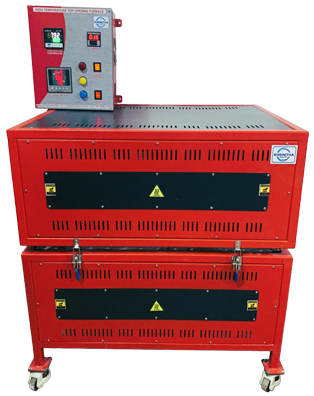
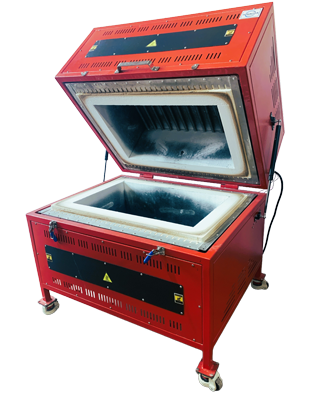
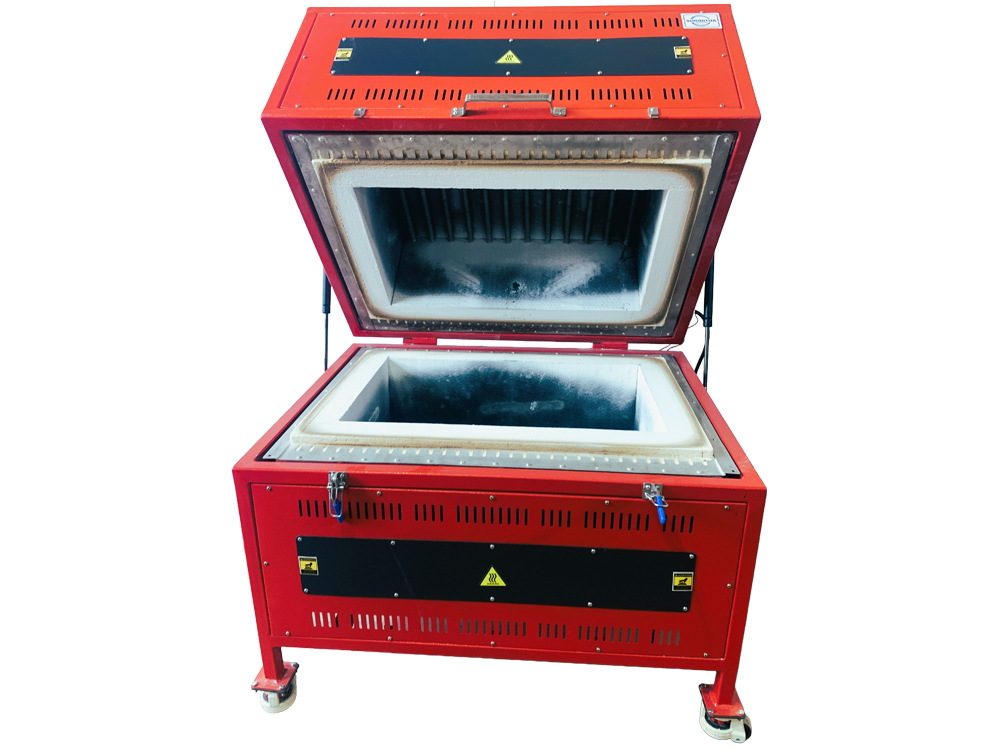
Also known as a Top Opening Furnace, Top Loading Furnace or Crucible Furnace, this furnace configuration provides access to the heating chamber from the upper side. The arrangement is particularly useful when samples or crucibles need to be placed directly into a vertically oriented heating chamber.
What is a Top Loading Furnace?
A Top Loading Furnace is a high-temperature electric furnace in which the furnace chamber is accessed through an opening at the top. Samples, crucibles or other suitable containers can be loaded vertically into the heated chamber.
The top-opening arrangement provides convenient access to the furnace chamber and can be useful for applications involving crucibles, powders, ceramics, metals and other materials that require high-temperature treatment. Top-loading crucible furnaces are also used for laboratory melting and materials-processing applications.
Shrinitha Scientific manufactures Top Loading Furnaces with a maximum temperature capability of 1400°C, with the furnace configuration adaptable according to the required application, chamber size and process conditions.
Key Features of Top Loading Furnace
- Maximum temperature capability up to 1400°C
- Convenient top-opening design
- Vertical loading and unloading of samples
- Suitable for crucible-based applications
- Electrically heated furnace
- High-temperature thermal insulation
- Robust furnace construction
- Digital temperature indication and control
- Programmable temperature control available as per model
- Suitable for laboratory and R&D applications
- Compact and practical loading arrangement
- Suitable for repeated heating cycles
- Customizable chamber dimensions
- Suitable for different sample and crucible sizes
- Application-specific furnace configurations available
Technical Specifications
| Parameter | Specification |
|---|---|
| Product | Laboratory Top Loading Furnace |
| Alternate Names | Top Opening Furnace / Crucible Furnace |
| Maximum Temperature | Up to 1400°C |
| Furnace Type | Electrically Heated Top Loading Furnace |
| Loading Arrangement | Top Loading / Vertical Loading |
| Heating System | Electrical Resistance Heating |
| Temperature Control | Digital / PID-based control, as per model |
| Temperature Programming | Available as per model |
| Furnace Chamber | High-temperature insulated chamber |
| Insulation | Suitable high-temperature refractory insulation |
| Chamber Capacity | Customizable |
| Chamber Dimensions | As per application requirement |
| Heating Zone | Single / Customized |
| Crucible Compatibility | Suitable crucibles according to process and temperature |
| Application | Heat Treatment, Sintering, Calcination, Melting, Material Research, etc. |
| Power Supply | As per furnace configuration |
| Construction | Robust laboratory / industrial construction |
| Customization | Available |
Note: Final specifications such as chamber size, electrical load, heating element selection and control configuration depend on the required operating conditions and furnace model.
How Does a Top Loading Furnace Work?
The operating principle of a Top Loading Furnace is based on controlled electrical heating of an insulated chamber.
1. Sample or Crucible Loading
The required sample, material or crucible is placed inside the furnace chamber through the top opening.
2. Closing the Furnace
After positioning the sample correctly, the top lid is closed to create the required enclosed heating environment.
3. Temperature Setting
The desired temperature is entered through the furnace temperature controller. A programmable controller can be used where a defined heating and holding profile is required.
4. Controlled Heating
Electrical heating elements generate heat around the chamber. The insulation helps retain heat within the furnace and supports efficient high-temperature operation.
5. Holding at Process Temperature
Once the desired temperature is reached, the material can be maintained at the required temperature for the specified duration.
6. Controlled Cooling
After completion of the heating cycle, the furnace can be allowed to cool according to the process requirements before the lid is opened and the sample is removed.
Types / Configurations of Top Loading Furnace
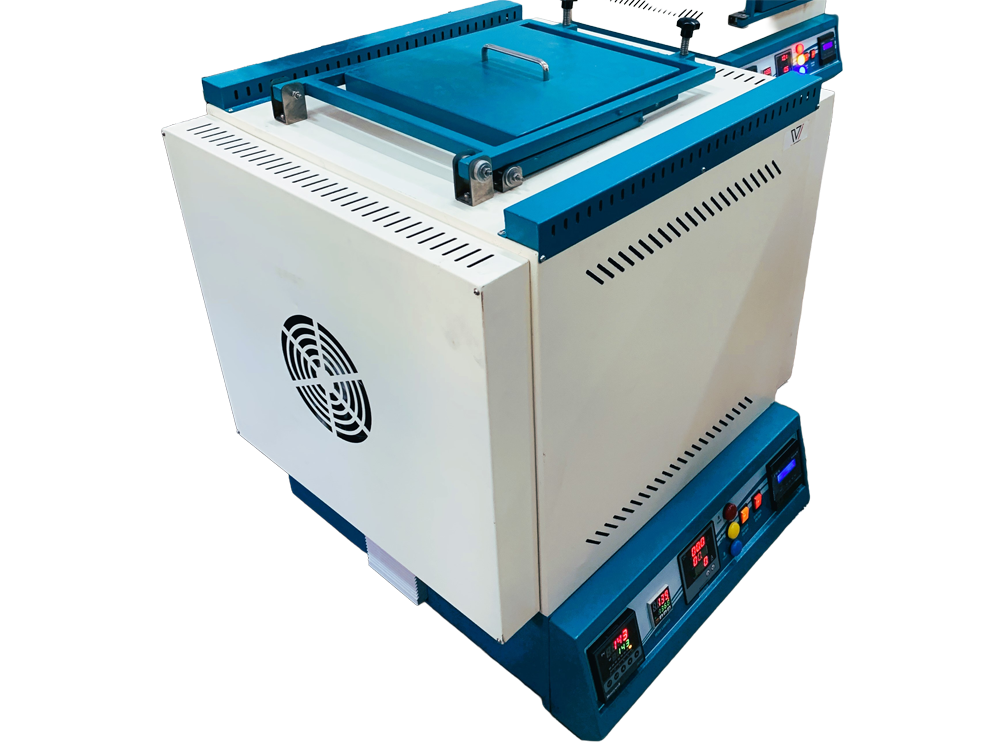
1. Top Loading Furnace
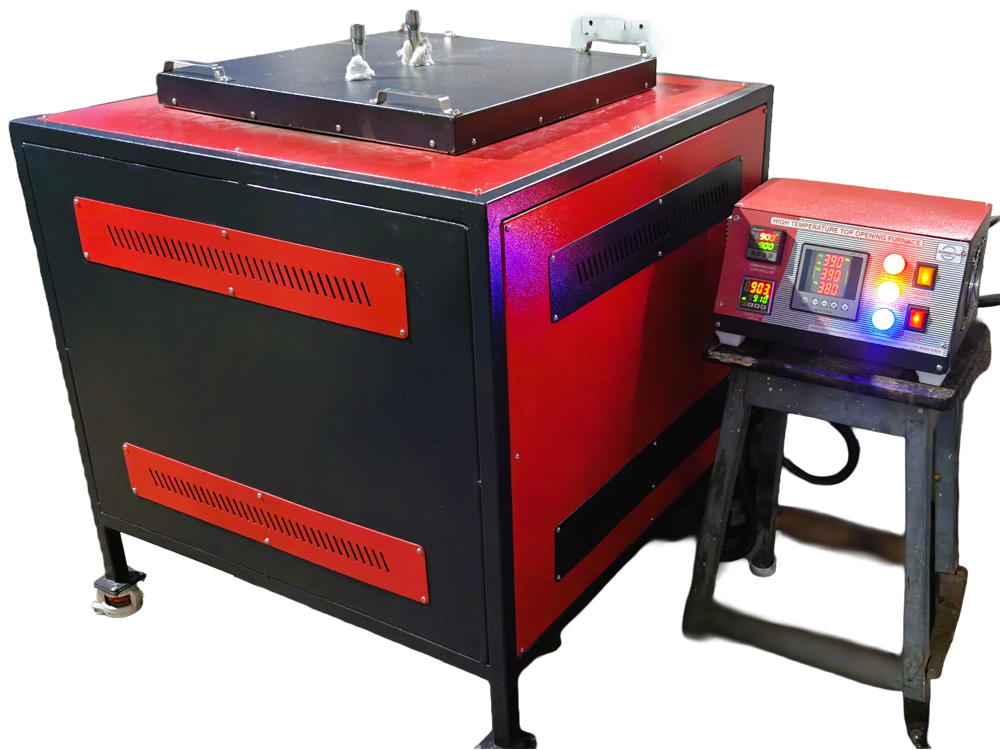
Applications of Top Loading Furnace
Top Loading Furnaces can be used for a wide range of laboratory and industrial R&D processes, including:
| Material heat treatment | Laboratory sample heating | Ceramic processing | Ceramic sintering |
| Powder sintering | Calcination | Ashing | Thermal decomposition studies |
| Metallurgical research | Material development | Crucible heating | Small-batch material processing |
| High-temperature testing | Research and development | Academic laboratory experiments | Chemical material processing |
| Refractory material studies | Non-ferrous material processing | Laboratory melting applications | Thermal treatment of powders and solids |
Crucible furnaces are used for laboratory applications and melting of suitable non-ferrous metals and alloys, while top-loading arrangements are also used for convenient vertical sample placement.
Advantages of Top Loading Furnace
Easy Top Access
The upper opening provides direct access to the furnace chamber, making sample and crucible placement convenient.
Convenient Crucible Loading
The vertical loading arrangement is particularly useful for processes involving crucibles and containers.
High-Temperature Capability
With an operating capability of up to 1400°C, the furnace is suitable for numerous high-temperature laboratory processes.
Practical Laboratory Design
The top-loading configuration provides a straightforward arrangement for laboratories where vertical sample loading is preferred.
Controlled Temperature Processing
Digital temperature control helps maintain the selected heating temperature according to the process requirement.
Programmable Operation
Where required, programmable temperature control can be incorporated for repeatable heating and holding cycles.
Flexible Application
The furnace can be used for material research, ceramics, metallurgy, sintering, calcination, heat treatment and other high-temperature processes.
Customizable Configuration
Chamber dimensions, heating arrangement, control system and other features can be developed according to the application.
Crucible Selection
The choice of crucible is an important consideration when using a Top Loading or Crucible Furnace. Crucible material should be selected according to:
- Maximum process temperature
- Material being processed
- Chemical compatibility
- Heating and cooling cycle
- Required crucible capacity
- Thermal expansion characteristics
- Intended application
Suitable crucible options may include ceramic, alumina, silicon carbide, graphite or other application-compatible materials. The appropriate crucible should always be selected according to the specific process and material being heated.
Temperature Control System
The Top Loading Furnace can be equipped with a suitable digital temperature-control system according to the selected model.
Possible control features include:
- Digital temperature display
- PID temperature control
- Set-point temperature control
- Programmable heating cycles
- Ramp and soak operation
- Over-temperature protection
- Thermocouple monitoring
- Temperature alarm
- Data logging, where required
The exact controller and protection features can be selected according to the user's application.
Optional Accessories
Depending on the application, Shrinitha Scientific can provide suitable accessories such as:
- High-temperature crucibles
- Crucible holders
- Crucible tongs
- Sample trays
- Customized sample holders
- Programmable temperature controller
- Data logging system
- Temperature recording arrangement
- Additional thermocouple arrangement
- Safety alarm system
- Customized chamber accessories
- Furnace stand or support arrangement
Why Choose Shrinitha Scientific Top Loading Furnace?
- Manufacturer and exporter of laboratory furnaces in India
- Temperature capability up to 1400°C
- Top-loading configuration for convenient sample handling
- Suitable for crucible-based processes
- Application-oriented furnace design
- Robust high-temperature construction
- Controlled electrical heating
- Digital temperature control
- Customizable chamber and furnace configuration
- Suitable for laboratory, academic and industrial R&D applications
- Technical support for application-specific furnace selection
Top Loading Furnace Manufacturer & Exporter in India
Shrinitha Scientific manufactures and exports Laboratory Top Loading Furnaces up to 1400°C, designed for reliable high-temperature processing, crucible heating, material research, sintering, calcination, heat treatment and other laboratory applications.
With a practical top-opening design and customizable configuration, our furnaces can be developed to suit different sample sizes, process temperatures and laboratory requirements.
For a Top Loading Furnace, Top Opening Furnace or Crucible Furnace in India, contact Shrinitha Scientific with your required temperature, chamber size and application details.
Frequently Asked Questions
1. What is a Top Loading Furnace?
A Top Loading Furnace is a high-temperature furnace in which samples, crucibles or materials are loaded into the heating chamber through an opening at the top.
2. What is another name for a Top Loading Furnace?
It may also be referred to as a Top Opening Furnace, Top Loading Furnace, Top-Opening Furnace or Crucible Furnace, depending on its design and application.
3. What is the maximum temperature of the Shrinitha Scientific Top Loading Furnace?
Shrinitha Scientific manufactures Top Loading Furnaces capable of operating at temperatures up to 1400°C.
4. Can a crucible be used inside the furnace?
Yes. The furnace can be configured for suitable crucible-based applications. The crucible material should be selected according to the temperature, material and process conditions.
5. What materials can be processed in a Top Loading Furnace?
Depending on the furnace configuration, applications may include ceramics, powders, refractory materials, metals, minerals and other laboratory materials requiring controlled high-temperature treatment.
6. Can the furnace be used for sintering?
Yes. Top Loading Furnaces can be used for suitable sintering applications where the required temperature and furnace atmosphere are compatible with the material and process.
7. Can the chamber size be customized?
Yes. Chamber dimensions and other furnace parameters can be customized according to sample size, crucible dimensions and process requirements.
8. Is temperature programming available?
Yes. Programmable temperature control can be provided depending on the selected model and application.
9. Is a Top Loading Furnace suitable for laboratory research?
Yes. It is suitable for academic laboratories, material research, industrial R&D centres and other facilities performing high-temperature experiments.
10. What should be considered when selecting a Top Loading Furnace?
Important factors include maximum temperature, chamber dimensions, sample size, crucible type, heating cycle, holding time, temperature-control requirements and the material being processed.